Australia’s financial services regulator called on insurers and banks to include climate as one of the material risks they manage to meet obligations to policyholders and depositors, Reuters reported. The Australian Prudential Regulatory Authority said that climate-related risks are foreseeable and actionable for financial firms.
A putative class action lawsuit filed against a Chicago senior living center under the Illinois Biometric Information Privacy Act has been settled for an undisclosed amount, according to a district court filing in the case. The case, Cynthia Dixon v. The Washington and Jane Smith Community-Beverly et al., is one of about 200 cases that have been filed under the law, according to a defense attorney who is not directly involved in the case. In January, the Illinois Supreme Court held in a unanimous opinion involving Six Flags Entertainment Corp. that plaintiffs can sue firms under the Illinois Biometric Information Privacy Act for allegedly failing to properly notify people about their policies even if no actual harm is claimed. In her lawsuit against the center, which was originally filed in state court, then moved to U.S. District Court in Chicago, Ms. Dixon charged the center had unlawfully collected, used, stored and disclosed her and the proposed class’ “sensitive and proprietary biometric data” in violation of the Illinois law. According to the complaint, when employees are first hired by the center, they are required to have their fingerprints scanned by a Kronos Inc. fingerprint scanner to enroll them in its employee database. Chelmsford, Mass.-based Kronos is also a defendant in the case. The complaint said also Ms. Dixon was required to scan her fingerprints at the beginning and end of each workday. The complaint charges the center did not inform its employees that it disclosed employees’ fingerprint data to the vendor; that it did not inform its employees of the purpose and duration for which it collects this data; that it did not obtain written releases from employees before collecting their fingerprints; and that it did not provide employees with a written, publicly available policy on the issue.
— A massive fire at a fuels storage company along the Houston Ship Channel may burn for two more days, an official said on Monday as the blaze spread a plume of black smoke across the city, shutting schools in two nearby communities. The fire began Sunday morning in a giant storage tank containing naphtha, a volatile substance used to create octane-boosting components of gasoline. No injuries were reported from the fire, but nearby residents were encouraged to remain indoors. The entire city of Deer Park, Texas, a Houston suburb, was told to shelter indoors all day Sunday. The order was lifted Monday.
The National Flood Insurance Program is launching a new risk rating system for its flood insurance policies. David Maurstad, deputy associate administrator of the Federal Insurance and Mitigation Administration and chief executive of the NFIP, called Risk Rating 2.0 a “game-changing initiative for the NFIP” during a media call on Monday. More information about policyholder impacts and the implementation timeline will be released in the coming weeks, but the new rating system for flood risks will be “data-driven” and factor in different variables rather than basing flood insurance premiums simply on whether or not a policyholder is in a flood zone, Mr. Maurstad said. For example, the new system will determine a policyholder’s flood risk by incorporating elements such different types of flooding — heavy rainfall from a hurricane, river overflow or coastal surge — and a building’s distance to a coast or river. “We’re going to change an insurance rating structure that hasn’t fundamentally been changed since the 1970s,” he said. “We’re going to consider more flood risks than we currently do now. It is going to be based on replacement costs of the properties.” The intention is to try to “close the insurance gap,” Mr. Maurstad said.
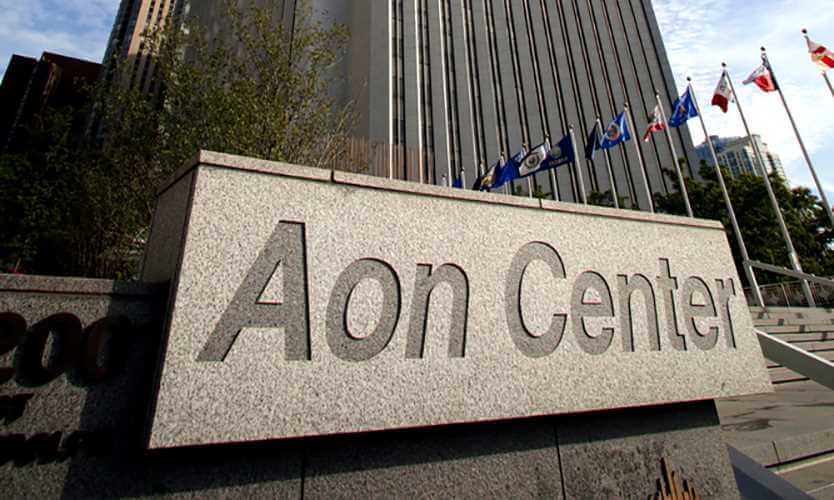
Aon PLC confirmed Tuesday that it is considering a bid for rival Willis Towers Watson PLC in a deal that potentially would create a brokerage behemoth with more than $19 billion in annual revenue.
In a statement, Aon said: “The company confirms that it is in the early stages of considering an all-share business combination with Willis Towers Watson. The company emphasizes that, at this point, its evaluation of a potential transaction is at a preliminary stage and there can be no certainty that any transaction will take place nor as to the form or terms on which any transaction might be pursued.”
The announcement followed a Bloomberg report earlier on Tuesday citing unidentified sources that said Aon is preparing to submit a bid for its rival “in the coming weeks” and the firm’s “have held preliminary talks.”
If it goes ahead, a merger of Aon, the world’s second largest brokerage, with Willis Towers Watson, the No. 3 brokers, would create the largest insurance brokerage in the world, eclipsing rival Marsh & McLennan Cos. Inc., which is in the process of buying Jardine Lloyd Thompson Group PLC, another Top 10 brokerage.
February premium renewal rates increased across all major commercial lines of business in February except for workers compensation, Ivans Insurance Solutions said Tuesday in its monthly report.
Tampa, Florida-based Ivans said the largest increase in premium renewal rates was for commercial auto, which increased 4.61%, compared with a 4.57% increase in January.
Increases were also reported for commercial property, up 4.58% from 3.74%; umbrella, up 3.06% from 2.17%; and general liability, up 1.81% from 1.16% in January.
Workers compensation was down 3.38%, compared with a 1.04% decrease in January. In addition, business owners’ policies were down 3.94%, compared with a 4.23% decrease in January, according to the report.
Insurance Australia Group Ltd.’s profit declined more than 9% year over year to $500 million Australia ($357 million) in the six months ended Dec. 31, 2018 driven by Sydney hailstorm-related losses, The Sydney Morning Herald reported. Gross written premiums totaled nearly AUD 6 billion while the insurer’s underlying margin grew more than 16%. Insurance profit fell 33% to AUD 496 million.
Sebastian Pinera, president of Chile, declared a state of catastrophe after forest fires burned more than 8,000 hectares of land across southern Chile, Prensa Latina. Mr. Pinera declared the state of catastrophe in the regions of La Araucania, Biobio and Los Rios.
U.K.-based consultancy firm Peel Hunt L.L.P. said that reinsurance prices would rise this year, driven by factors related to increasing claim volumes and waning profits, Artemis.bm reports. Analysts at Peel Hunt said that insurance-linked securities funds sought rate increases at the January renewals and are likely to continue to achieve higher prices this year.
For most people, reading and understanding insurance contracts can be a daunting task. Understanding your coverage and how it compares to alternative options available is important as it can have a significant impact on your financial security. Having a representative to assist you can save you valuable time and money. Things to consider when choosing an insurance broker:- 1. Agents vs. Brokers There are two different ways to get insurance from an insurance company. Direct writers i.e agents of the company are hired by insurance companies as their own sales people to write exclusively for them; they work for the company that employs them. Independent brokers work for the insured, not the company. However, they have contracts with multiple insurance companies and can usually offer you more options. As Commercial entities require more specialized technical knowledge, brokers are better suited to handle such accounts, and this is why a significant majority of Commercial Policies are placed through brokers. 2. What type of insurance do you need? Some brokers will offer many types of insurance and some will be limited in their offerings. For example, some might only offer personal lines insurance whereas others will offer both personal and commercial lines. If you own a business and are looking for an agent to write your commercial insurance, you want to make sure they have some experience with your industry. 3. Technical Knowledge & Credentials: You should always ask the account executive about their experience before trusting them as your insurance advisor. One indication of their technical knowledge is if they have letters after their name. These letters stand for professional insurance designations that signify a higher level of experience and competence. Some of the more common designations are CIC, ACII, CIP, CPCU, ARM and CRM. Other things to look for are years of experience and education. 4. Questions to ask: When deciding on which brokerage you want to work with Some good questions to ask them are: o How many staff do you employ? o What is your reach? Can you access overseas markets? o What is your experience in my industry? How many years have you been writing this type of insurance? o How long have you been in business? o How many companies do you represent? Which ones? 5. Do your homework: Before selecting a brokerage, you should first do your homework on the company as well as the account executives. Your first step is to google the brokerage- Are there any news articles about them? Have they faced any lawsuits? Are there any reviews? Have a look at their website. Is it professional? Are there any testimonials? You may also want to look at their social media pages (Facebook, LinkedIn, Google+, Twitter, Instagram) for reviews and educational content. 6. Service Expectations: A good way to gauge if the account executive can live up to your expectations is by asking them for a quote before you commit to doing business with them. This should give you a good idea of how efficient they are (how fast they can get you a quote), how thorough they are when explaining what coverage you’re afforded in the policy, why the price varies if more than one quote is provide. Just as it is important to understand and consider your coverage when placing your coverage, it is important to evaluate your service provider up-front. This is who you will be relying on to assist you when you have a claim, which is a stressful time under the best of circumstances.
A plan for covering groups of persons with individual policies having uniform provisions, although they may differ in benefits. Individual contracts are issued to each person, with individual underwriting. It is usually applied to groups too small to qualify for true group coverage, and the solicitation of cases usually takes place among an employer’s work force with his consent. In Life Insurance, it is sometimes called Wholesale Insurance. Contrast with True Group Insurance.

 Facebook
 Linked In
 Instagram
 Contact Us
 News
 Calculators